10 Ways to Build Belonging for Kids With Limb Differences
Discover 10 practical ways families, schools and communities can help children with limb differences feel seen, supported, represented and included.
4/14/20261 min read
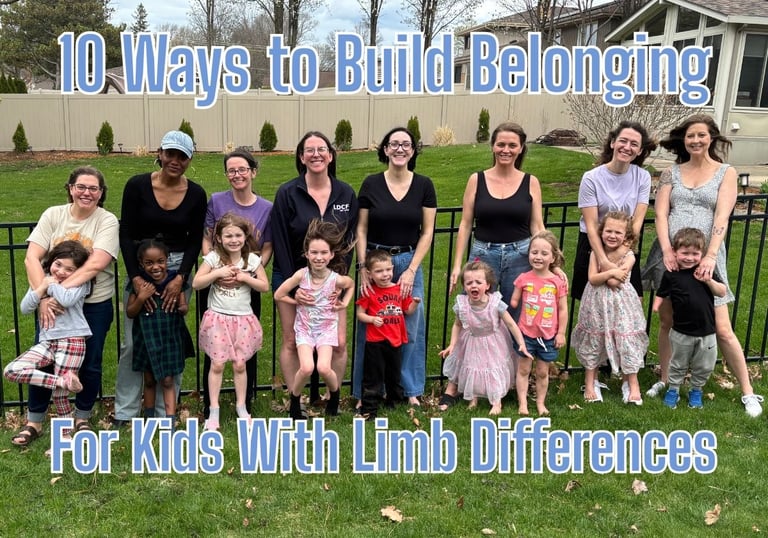
Belonging isn’t a bonus - it’s essential. Every person wants to belong, be accepted, be understood, whether they admit it or not. Kids with limb differences thrive when they feel seen, supported, and celebrated.
Here are ten simple ways to build belonging every day.
1. Use respectful, person‑first language
Words shape how kids see themselves. Using phrases like “child with a limb difference” helps center their humanity, not their limb.
2. Normalize differences early
Books, toys, and media matter, because they show kids that bodies come in many forms - and all of them are normal.
3. Encourage curiosity
Teach kids how to ask questions kindly so curiosity becomes a bridge, not a barrier.
4. Celebrate strengths
Focus on what kids can do. Confidence grows when adults notice effort, creativity, and resilience.
5. Provide representation
Show images, stories, and role models with limb differences in your home, classroom, and community. Representation tells kids, “You belong here.”
6. Build community
Connect with other families, groups, and adaptive programs. Community reduces isolation and expands support.
7. Advocate in schools
Ensure inclusion, accessibility, and awareness. Ask teachers how they approach differences and offer simple resources to help. This may be the first time they are working with a child with a limb difference. Give them grace by asking them to help you and the child along on the journey.
8. Support emotional health
Check in regularly. Listen deeply. Kids thrive when their feelings are met with validation and care.
9. Offer choices
Prosthetic or no prosthetic - the child’s comfort matters. Empowering kids to choose builds autonomy and self‑trust.
10. Lead with kindness
Kids learn from what we model. When adults respond with empathy, kids learn to do the same.
💛 Belonging Is Built Together
Every small action adds up.
Every conversation matters.
Every child deserves to feel like they belong.
Support
The Limb Difference Collective Foundation is a registered 501(c)(3) nonprofit organization (EIN 33-3938100) based in Illinois. We are proud to support families in the limb difference community across Chicagoland and beyond by providing resources, support, and opportunities to connect. Every contribution—whether financial or in-kind—helps this grow, uplift our community, and make lasting change.
Together, we can make a difference for those just beginning their journey or wanting to get more involved. Thank you for being part of this adventure.
© 2026. All rights reserved. Managed by Limb Difference Collective Foundation